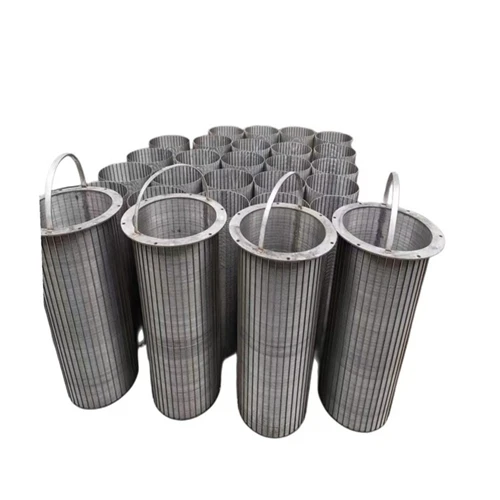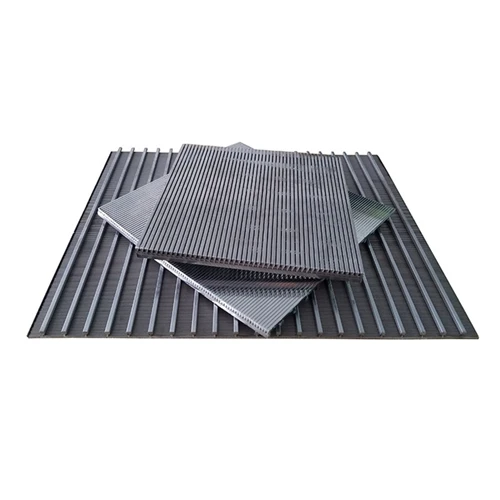
The most common mistake when ordering a well screen is choosing a slot by feel. The slot decides how much sand enters the well and how much water the well yields, so it comes from a sieve analysis of the aquifer sample. A lab runs the formation sand through a stack of sieves and plots the grain curve. Screen slot is then set around the 10-percent retaining line: wide enough for long-term yield, narrow enough to hold back most formation sand.
Rule of thumb from drilling practice: retain 30 to 50 percent of the aquifer sand, and let finer material pump out during development. Too narrow a slot chokes yield and clogs quickly; too wide brings continuous sand and wears the pump. Slot openings on stainless Johnson screens start around 0.05 mm and run to several millimeters, so most aquifers can be matched.
Also match the barrel diameter to pump capacity and check collapse rating against well depth. 304 works for fresh water, 316L for brackish or corrosive water. Threaded couplings should seal without weld spatter inside the tube, and each joint carries a tag marking slot size and material grade for later inspection. Record the chosen slot on the well completion report so future work matches the original screen.